Imaging Advances in Facial Pain

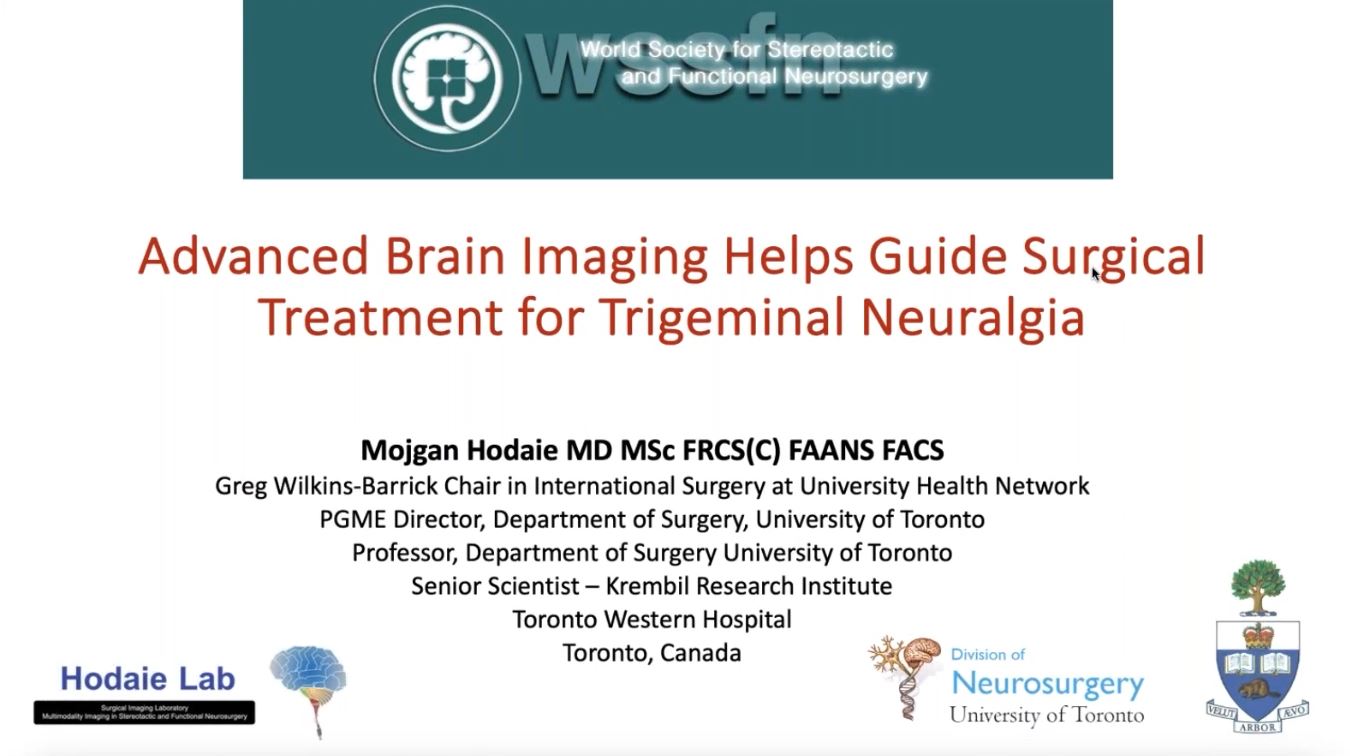
In this webinar, we will explore the role of advanced brain imaging techniques in the understanding of facial pain, with a focus on trigeminal neuralgia. The session will address recent technical advancements in imaging and their impact on revealing nerve and brain related abnormalities in pain. We will then examine emerging therapeutic strategies and their relevance to the surgical management of facial pain. Speaker Dr. Mojgan Hodaie Dr. Mojgan Hodaie is a Professor in the Department of Surgery, University of Toronto and the Greg Wilkins-Barrick Chair in International Surgery at the University Health Network. Dr. Hodaie’s scientific research focuses primarily on advanced methods of MRI imaging in functional neurosurgery.  She has published key papers focusing on microstructural changes in trigeminal neuralgia, methods of small fiber tractography and structural neuroanatomical changes in the CNS gray and white matter in facial neuropathic pain. She was named a Fellow of the Canadian Academy of Health Sciences in 2023, in recognition of her research and clinical contributions. /wp-content/uploads/videos/wssfn07112023.mp4 Moderated by Dr Nico EnslinConsultant neurosurgeonRed Cross War Memorial Children’s Hospital and ConstantiabergUniversity of Cape Town, Cape Town, South Africa

Neurosurgical Ablative Procedures for Refractory Cancer Pain

Speakers Dr. Ido Strauss Director of the functional neurosurgery unit in the neurosurgical department at the Tel-Aviv Medical Center. Specialise in movement disorder surgery, epilepsy surgery and neurosurgical procedures to modulate or disconnect pain pathways in the central nervous system. Co-director of the inter-disciplinary clinic for refractory pain in cancer patients. The clinic evaluates cancer patients from all over Israel, who have failed all other “conventional” treatments and are suffering from intractable pain due to cancer. Appropriate patients are offered innovative neurosurgical interventions to disconnect the pain pathways in the spinal cord or modulate the pain perception in the brain neural-networks. > Cordotomy for Cancer Pain Dr. Harith Akram Prof. Akram is a consultant neurosurgeon and associate professor at the National Hospital for Neurology and Neurosurgery (UCLH) and the Unit of Functional Neurosurgery (UCL) in Queen Square. His scope of practice comprises brain and spine surgery. Mr Akram completed his specialist neurosurgery training at the London School of Surgery (Heath Education England). He was awarded the Norman Dott Gold Medal for the highest mark in the FRCS exam (Royal College of Surgeons, 2012). As a trainee, he was awarded the Cutlers’ Surgical Prize (Royal College of Surgeons, 2010), one of the most prestigious annual prizes for original innovation in the design or application of surgical instruments. He completed clinical fellowships at the National Hospital for Neurology and Neurosurgery in Queen Square (UCLH), London and at the Barrow Neurological Institute in Phoenix, Arizona and was the recipient of the Marjorie Newsome Fellowship (Barrow Foundation, 2013). Prof. Akram is a regularly invited keynote speaker and lecturer at various national and international neurological and neurosurgical conferences. He is the Editor-in-chief of the World Society of Stereotactic and Functional Neurosurgery (WSSFNS) newsletter. Prof. Akram’s research interests are in advanced computational neuroimaging and connectomic neurosurgery. His PhD degree on ‘The Application of Advanced MRI connectivity in Functional Neurosurgery’, awarded by UCL, received the Queen Square Symposium PhD Prize (2018). He has ongoing work to develop translational methods in MRI brain connectivity, in addition to his involvement in various clinical trials to improve the safety and efficacy of existing therapies, and explore new and emerging applications. > Cingulotomy for Cancer pain /wp-content/uploads/videos/wssfn28062023.mp4 Moderated by Dr Nico EnslinConsultant neurosurgeonRed Cross War Memorial Children’s Hospital and ConstantiabergUniversity of Cape Town, Cape Town, South Africa

Neurosurgery for task-specific focal dystonias

Two world-renowned neurosurgeons in the field of stereotactic and functional neurosurgery, are sharing their experience of more than 30 years of treating patients with task – specific dystonias. With, arguably, the largest series in the world. Both speakers are excellent presenters and teachers. Speakers Prof. Takaomi TairaProfessor, Director of Stereotactic and Functional Neurosurgery, Department of Neurosurgery, Tokyo Women’s Medical University (TWMU), Tokyo, Japan, Past President of the World Society for Stereotactic and Functional Neurosurgery and Japan Society for Stereotactic and Functional Neurosurgery.  Professor Taira’s main area of interest is Stereotactic and Functional Neurosurgery for movement disorders, including management of various types of dystonias. Pioneering surgical thalamotomy in Japan for the last 30 years, today Professor Taira’s armamentarium for treating essential tremor includes focused ultrasound, DBS, radiotherapy and RF thalamotomy. Prof. Shiro Horisawa Prof. Horisawa is the current Director of Stereotactic and Functional Neurosurgery, Department of Neurosurgery, Tokyo Women’s Medical University (TWMU), Tokyo, Japan. Prof Horisawa is still working closely with Prof Taira. His main area of interest is also Stereotactic and Functional Neurosurgery for movement disorders, including management of various types of dystonias. /wp-content/uploads/videos/wssfn22032023.mp4 Moderated by Dr Nico EnslinConsultant neurosurgeonRed Cross War Memorial Children’s Hospital and ConstantiabergUniversity of Cape Town, Cape Town, South Africa

Masterclass in MRI targeting for movement disorders

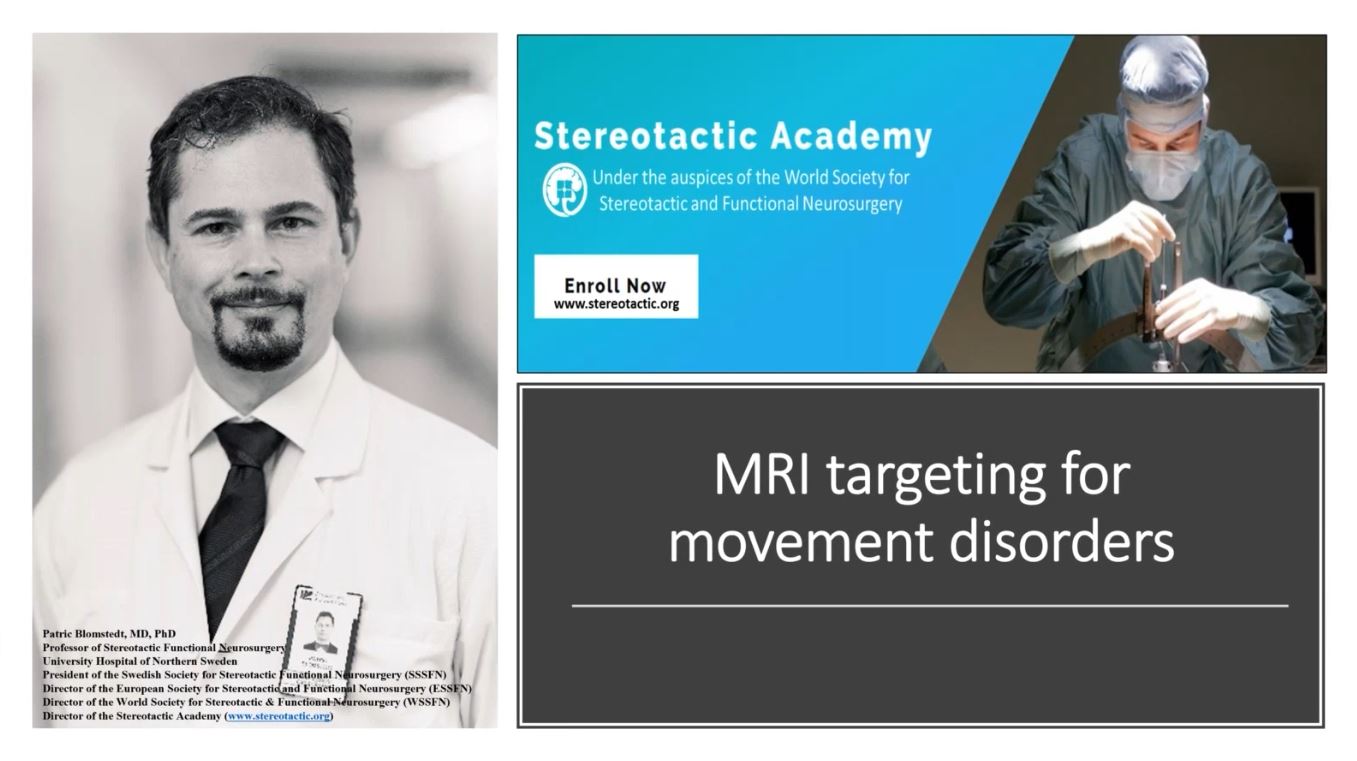
Visual MRI based targeting in DBS for movement disorders.A short introduction in how to identify the commonly used brain targets in stereotactic functional neurosurgery. Speaker Prof. Patric BlomstedtNeurosurgeon and professor at University of Umea, Sweden   Prof. Patric Blomstedt is neurosurgeon with a long history of neuromodulation for various movement disorders. He is professor at University of Umea, Sweden.  /wp-content/uploads/videos/wssfn23112022.mp4 Moderated by Dr Nico EnslinConsultant neurosurgeonRed Cross War Memorial Children’s Hospital and ConstantiabergUniversity of Cape Town, Cape Town, South Africa

GPi Continuous Electrical Neuromodulation in Secondary Dystonia-Dyskinesia Syndrome

Prof. Coubes and Dr. Poulen will discuss the work that they have been doing for more than 25 years on neuromodulation for secondary dystonia conditions and many of the “atypical” indications as well. A fascinating talk by one of the world’s leading experts in the field of DBS for movement disorders. Speakers Prof. Philippe Coubes, MD, PhDDepartment of Neurosurgery, Montpellier University hospitalDirector of the Research Unit on Movement and Behaviour DisordersMontpellier, France  Head of the multidisciplinary team “Intractable brain pathology” which currently manages adult and pediatric patients in two separated units. Montpellier’s group has developped the use of DBS in many diseases associated with dystono-dyskinetic syndromes and/or behavioural disorders. He has especially contributed to the validation of MRI-guided stereotactic surgery under general anesthesia without MER. Gaëtan Poulen, MD, PhDDepartment of Neurosurgery, Montpellier University hospitalMontpellier, France /wp-content/uploads/videos/wssfn30082022.mp4 Moderated by Dr Nico EnslinConsultant neurosurgeonRed Cross War Memorial Children’s Hospital and ConstantiabergUniversity of Cape Town, Cape Town, South Africa

Surgical Treatment For Pathological Aggressiveness (Part II)

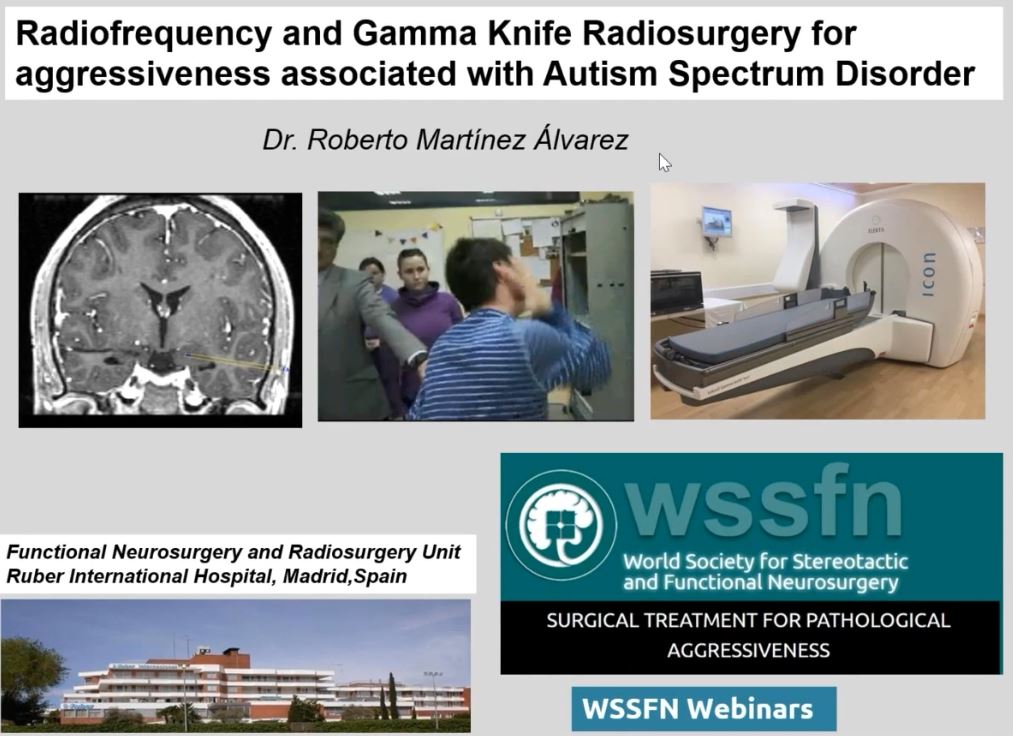
Speakers Roberto Martinez, MD, PhDDepartment of Functional NeurosurgeryDepartment of Gamma Knife RadiosurgeryHospital Ruber InternationalMadrid, Spain. > Radiofrequency and Gamma Knife radiosurgery for aggressiveness associated with Autism Spectrum Disorder Jorge C Holguin Lew, MD, Mphil, PhDLecturer in Psychopathology CES UniversityCenter for neurostimulation in Psychiatry (CETNI)Medellín, Colombia > Conceptual, Clinical and neurobiological issues in aggression: a view from neuropsychiatry William D Hutchison, PhDProfessor, Dept.’s Surgery and Physiology, University of TorontoSenior Scientist, Clinical and Computational NeuroscienceKrembil Research Institute, Humboldt ScholarToronto Ontario, Canada > Intraoperative mapping with microelectrodes for posterior hypothalamic DBS in aggressiveness Flavia Venetucci Gouveia, MSc, PhDPostdoctoral Researcher at The Hospital for Sick ChildrenToronto, Ontario, Canada > Brain networks involved in symptom improvement following posterior hypothalamus deep brain stimulation for aggressive behaviour. /wp-content/uploads/videos/wssfn24052022.mp4 Moderated by Dr. A. RUSHNAClinical Instructor, Michigan State UniversityDirector of Restorative and Functional NeurosurgerySpectrum Health Medical GroupGrand Rapids, MI, USA

Surgical Treatment For Pathological Aggressiveness (Part I)

Speakers Clement Hamani, PhDSunnybrook Research InstituteCentre of Neuromodulation, Hurvitz Brain Science CenterToronto, ON, Canada > Neuroanatomy of surgery for aggressive behaviour. Cristina V Torres, MD, PhDDepartment of Neurosurgery, University Hospital La PrincesaHospital Ruber InternacionalMadrid, Spain > Intraoperative findings during hypothalamic DBS for aggressiveness. Adriana-Lucía Lopez-Ríos, MDDepartment of Neurosurgery, Hospital San VicenteFundación Medellín y RíonegroMedellín, Colombia > Deep brain Stimulation for aggressiveness. /wp-content/uploads/videos/wssfn22022022.mp4 Moderated by Dr. A. RUSHNAClinical Instructor, Michigan State UniversityDirector of Restorative and Functional NeurosurgerySpectrum Health Medical GroupGrand Rapids, MI, USA

Interim WSSFN Virtual Symposium // Advances in Functional Neurosurgery

Speakers Jin Woo Chang, MD, PhD Jin Woo Chang, MD, PhDWSSFN PresidentSouth Korea > Opening remarks Currently Dr. Chang serves as president of World Society for Stereotactic & Functional Neurosurgery (WSSFN) from 2019. In addition, he is also a section editor of World Neurosurgery and member of the editorial board for the official journal of WSSFN as well as the official journal of the International Neuromodulation Society (INS). Current position: Department of Neurosurgery, Yonsei University College of Medicine, Seoul, Korea. Kendall H. Lee, MD, PhD Kendall H. Lee, MD, PhDWSSFN Scientific Committee ChairmanUSA > Welcome Kendall H Lee is Professor of Neurological Surgery and Biomedical Engineering at Mayo Clinic Rochester. He received his M.D. and Ph.D. degrees from Yale University in 1998. His doctoral dissertation was on neurochemical modulation of synchronized oscillations in the thalamus (Department of Neurobiology). He completed his neurosurgery residency at Dartmouth-Hitchcock Medical Center, with an emphasis on stereotactic and functional neurosurgery and deep brain stimulation (DBS). In 2006, He joined Mayo Clinic as a stereotactic and functional neurosurgeon with clinical emphasis on DBS. He founded and is a co-director of the Mayo Neural Engineering Laboratories (NEL) since 2006. His research focusses on neuroscience, specifically in electrophysiology, stereotactic and functional neurosurgery, and electrochemistry. For the past fifteen years, his research has focused on elucidating the therapeutic mechanisms of electrical stimulation in restoring function in both brain and spinal cord. His lab’s endeavors have included intensive collaboration with Mayo’s Division of Engineering to develop novel research devices such as wireless fast-scan cyclic voltammetry designed for use during human and animal DBS surgery to monitor the neurochemical and electrophysiological bases of DBS, as well as research tools and novel stereotactic headframes and MR imaging strategies to investigate effects. Russell Lonser, MD Russell Lonser, MDUSA Magnetic resonance imaging-guided gene therapy for thetreatment of aromatic L-aminoacid decarboxylase deficiency Mojgan Hodaie, MD, FRCSC Mojgan Hodaie, MD, FRCSCCanada Advanced structural brain imagingin functional neurosurgery Bradley J. Erikson, MD, PhD Bradley J. Erikson, MD, PhDUSA Deep Learning in Neurosurgery Shiro Horisawa, MD Shiro Horisawa, MDJapan Forel’s field surgery for movementdisorders and beyond Jin Woo Chang, MD, PhDWSSFN PresidentSouth Korea > Opening remarks Currently Dr. Chang serves as president of World Society for Stereotactic & Functional Neurosurgery (WSSFN) from 2019. In addition, he is also a section editor of World Neurosurgery and member of the editorial board for the official journal of WSSFN as well as the official journal of the International Neuromodulation Society (INS). Current position: Department of Neurosurgery, Yonsei University College of Medicine, Seoul, Korea. Kendall H. Lee, MD, PhDWSSFN Scientific Committee ChairmanUSA > Welcome Kendall H Lee is Professor of Neurological Surgery and Biomedical Engineering at Mayo Clinic Rochester. He received his M.D. and Ph.D. degrees from Yale University in 1998. His doctoral dissertation was on neurochemical modulation of synchronized oscillations in the thalamus (Department of Neurobiology). He completed his neurosurgery residency at Dartmouth-Hitchcock Medical Center, with an emphasis on stereotactic and functional neurosurgery and deep brain stimulation (DBS). In 2006, He joined Mayo Clinic as a stereotactic and functional neurosurgeon with clinical emphasis on DBS. He founded and is a co-director of the Mayo Neural Engineering Laboratories (NEL) since 2006. His research focusses on neuroscience, specifically in electrophysiology, stereotactic and functional neurosurgery, and electrochemistry. For the past fifteen years, his research has focused on elucidating the therapeutic mechanisms of electrical stimulation in restoring function in both brain and spinal cord. His lab’s endeavors have included intensive collaboration with Mayo’s Division of Engineering to develop novel research devices such as wireless fast-scan cyclic voltammetry designed for use during human and animal DBS surgery to monitor the neurochemical and electrophysiological bases of DBS, as well as research tools and novel stereotactic headframes and MR imaging strategies to investigate effects. Russell Lonser, MDUSA Magnetic resonance imaging-guided gene therapy for thetreatment of aromatic L-aminoacid decarboxylase deficiency Mojgan Hodaie, MD, FRCSCCanada Advanced structural brain imagingin functional neurosurgery Bradley J. Erikson, MD, PhDUSA Deep Learning in Neurosurgery Shiro Horisawa, MDJapan Forel’s field surgery for movementdisorders and beyond /wp-content/uploads/videos/wssfn05112021.mp4 Moderated by Bomin Sun, MD, PhD Bomin Sun, MD, PhDChina Kendall H. Lee, MD, PhD Kendall H. Lee, MD, PhDWSSFN Scientific Committee ChairmanUSA Kendall H Lee is Professor of Neurological Surgery and Biomedical Engineering at Mayo Clinic Rochester. He received his M.D. and Ph.D. degrees from Yale University in 1998. His doctoral dissertation was on neurochemical modulation of synchronized oscillations in the thalamus (Department of Neurobiology). He completed his neurosurgery residency at Dartmouth-Hitchcock Medical Center, with an emphasis on stereotactic and functional neurosurgery and deep brain stimulation (DBS). In 2006, He joined Mayo Clinic as a stereotactic and functional neurosurgeon with clinical emphasis on DBS. He founded and is a co-director of the Mayo Neural Engineering Laboratories (NEL) since 2006. His research focusses on neuroscience, specifically in electrophysiology, stereotactic and functional neurosurgery, and electrochemistry. For the past fifteen years, his research has focused on elucidating the therapeutic mechanisms of electrical stimulation in restoring function in both brain and spinal cord. His lab’s endeavors have included intensive collaboration with Mayo’s Division of Engineering to develop novel research devices such as wireless fast-scan cyclic voltammetry designed for use during human and animal DBS surgery to monitor the neurochemical and electrophysiological bases of DBS, as well as research tools and novel stereotactic headframes and MR imaging strategies to investigate effects. Bomin Sun, MD, PhDChina Kendall H. Lee, MD, PhDWSSFN Scientific Committee ChairmanUSA Kendall H Lee is Professor of Neurological Surgery and Biomedical Engineering at Mayo Clinic Rochester. He received his M.D. and Ph.D. degrees from Yale University in 1998. His doctoral dissertation was on neurochemical modulation of synchronized oscillations in the thalamus (Department of Neurobiology). He completed his neurosurgery residency at Dartmouth-Hitchcock Medical Center, with an emphasis on stereotactic and functional neurosurgery and deep brain stimulation (DBS). In 2006, He joined Mayo Clinic as a stereotactic and functional neurosurgeon with clinical emphasis on DBS. He founded and is a co-director of the Mayo Neural Engineering Laboratories (NEL) since 2006. His research

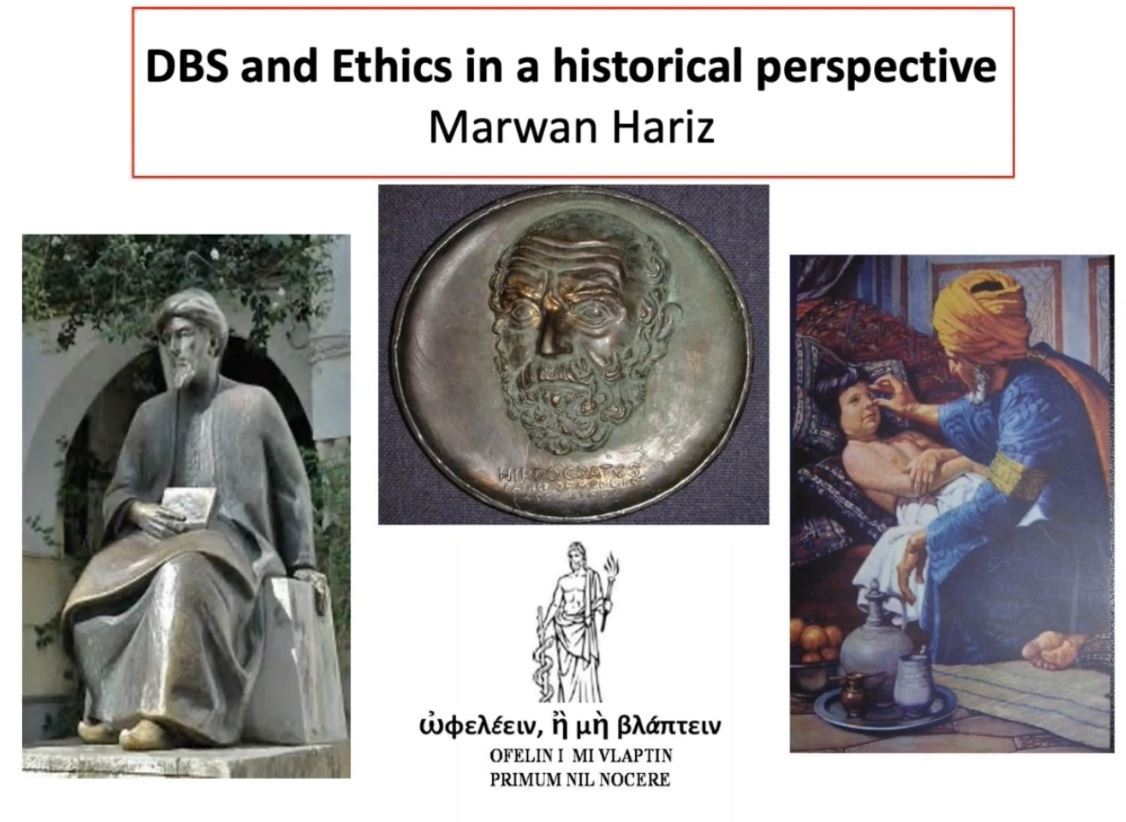
DBS and ethics in a historical perspective

Speaker Professor Marwan HarizEmeritus Professor and previous Head Of Division of Functional and stereotactic Neurosurgery at Queen’s Square Hospital in London. Professor Hariz currently joins Prof Patric Blomstedt in Sweden at Umea University’s Functional Neurosurgical Unit.Professor Hariz is a well known and well loved speaker and neurosurgeon all over the world. He is one of the renowned neurosurgeons and researchers in the field of stereotactic neurosurgery.He will talk about ethical issues pertaining to Deep Brain Stimulation as well as interesting Historical aspects of DBS. /wp-content/uploads/videos/wssfn03112021.mp4 Moderated by Dr Nico EnslinConsultant neurosurgeonRed Cross War Memorial Children’s Hospital and ConstantiabergUniversity of Cape Town, Cape Town, South Africa

Surgical techniques and outcomes in Deep Brain lesioning for Occessive Compulsive disease and Depression

This webinar will focus on patient selection, workup for surgery, target selection and surgical techniques and outcomes of lesioning techniques. All rounded off with the privilege to have an expert psychiatrist with a pro-neurosurgery viewpoint, give his opinion and discuss selection and outcomes. Speakers Keith Matthews, MD, PhDProfessor of PsychiatryDivision of Molecular and Clinical MedicineSchool of MedicineUniversity of DundeeDundee, United Kingdom Prof Ludvic ZrinzoQueen’s Square HospitalUniversity College of LondonLondon, United Kingdom /wp-content/uploads/videos/wssfn08072021.mp4 Moderated by Dr Nico EnslinConsultant neurosurgeonRed Cross War Memorial Children’s Hospital and ConstantiabergUniversity of Cape Town, Cape Town, South Africa

Proudly powered by WordPress | Theme : News Elementor by BlazeThemes