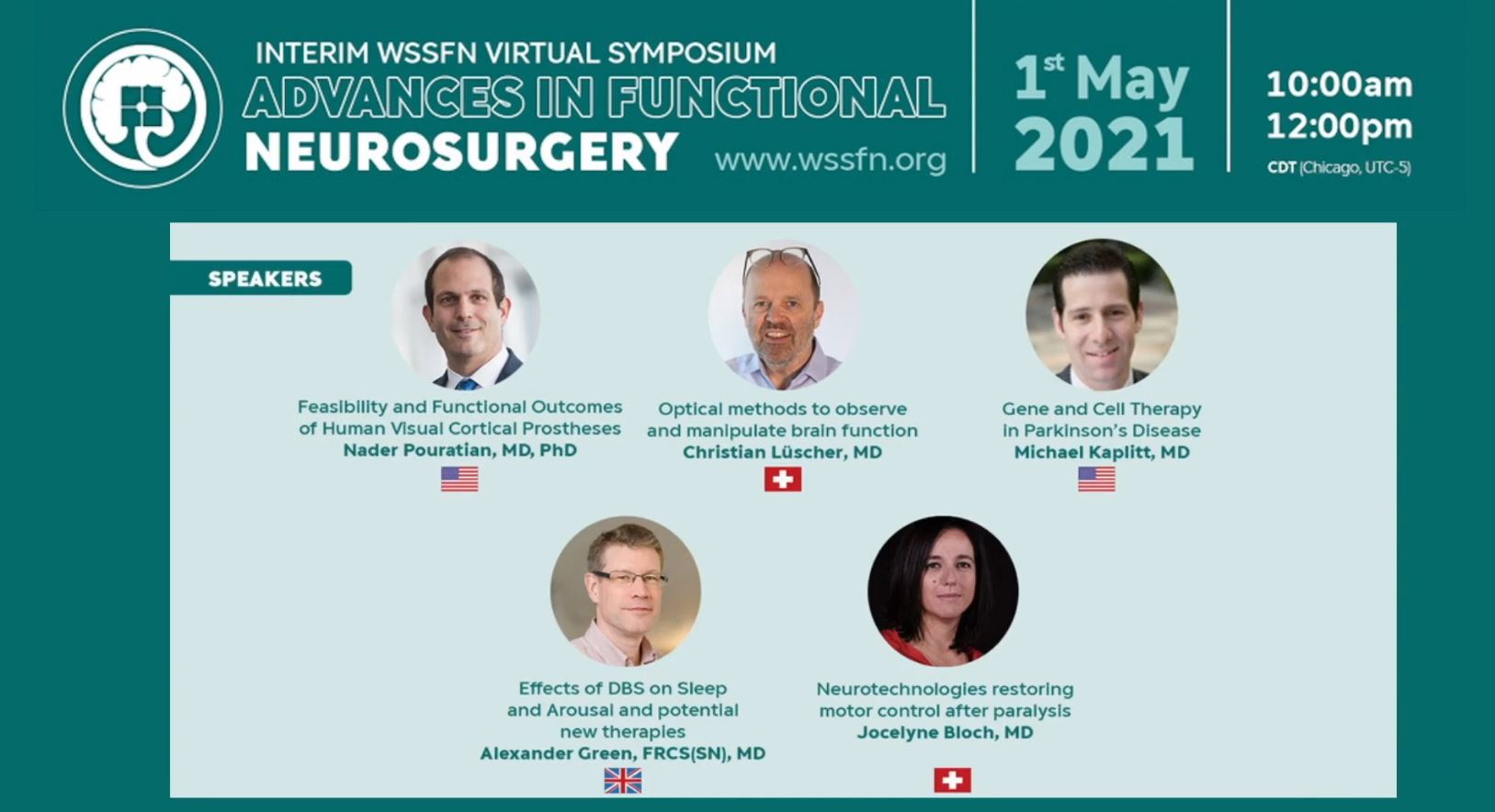
Interim WSSFN Virtual Symposium // Advances in Functional Neurosurgery

Speakers Jin Woo Chang, MD, PhD Jin Woo Chang, MD, PhDWSSFN President > Opening remarks Currently Dr. Chang serves as president of World Society for Stereotactic & Functional Neurosurgery (WSSFN) from 2019. In addition, he is also a section editor of World Neurosurgery and member of the editorial board for the official journal of WSSFN as well as the official journal of the International Neuromodulation Society (INS). Current position: Department of Neurosurgery, Yonsei University College of Medicine, Seoul, Korea. Kendall H. Lee, MD, PhD Kendall H. Lee, MD, PhDWSSFN Scientific Committee Chairman > Welcome Kendall H Lee is Professor of Neurological Surgery and Biomedical Engineering at Mayo Clinic Rochester. He received his M.D. and Ph.D. degrees from Yale University in 1998. His doctoral dissertation was on neurochemical modulation of synchronized oscillations in the thalamus (Department of Neurobiology). He completed his neurosurgery residency at Dartmouth-Hitchcock Medical Center, with an emphasis on stereotactic and functional neurosurgery and deep brain stimulation (DBS). In 2006, He joined Mayo Clinic as a stereotactic and functional neurosurgeon with clinical emphasis on DBS. He founded and is a co-director of the Mayo Neural Engineering Laboratories (NEL) since 2006. His research focusses on neuroscience, specifically in electrophysiology, stereotactic and functional neurosurgery, and electrochemistry. For the past fifteen years, his research has focused on elucidating the therapeutic mechanisms of electrical stimulation in restoring function in both brain and spinal cord. His lab’s endeavors have included intensive collaboration with Mayo’s Division of Engineering to develop novel research devices such as wireless fast-scan cyclic voltammetry designed for use during human and animal DBS surgery to monitor the neurochemical and electrophysiological bases of DBS, as well as research tools and novel stereotactic headframes and MR imaging strategies to investigate effects. Nader Pouratian, MD, PhD Nader Pouratian, MD, PhD > Feasibility and Functional Outcomes of Human Visual Cortical Prostheses Dr Pouratian’s integrated clinical and research interests focus on using and developing novel neuromodulatory approaches to ameliorate neurological and psychiatric disease. His research specifically focuses on in-depth exploration of brain mapping signals (LFP, ECoG, DTI, fMRI) in order to characterize the network basis of disease and therapeutic neuromodulation, with a goal of creating novel stimulation-based therapies. Christian Lüscher, MD Christian Lüscher ,MD > Optical methods to observe and manipulate brain function Christian Lüscher did his medical school in Lausanne & Berne. Since 2000 he is the head a research group and clinical attending at the Medical Faculty of the University of Geneva. His work aims at understanding the neural mechanism underlying addiction and other behavioral diseases, for which he has received numerous distinctions (e.g. Otto Naegeli Prize 2020). Recently, he has proposed novel protocols for deep brain stimulation based on optogenetic circuit interrogation in rodent models of addiction and obsessive compulsive disorders. Michael Kaplitt, MD, PhD Michael Kaplitt, MD, PhD > Gene and Cell Therapy in Parkinson’s Disease Michael G. Kaplitt, MD PhD is Professor of Neurological Surgery with tenure, Residency Program Director and Vice-Chairman for Research in the Department of Neurological Surgery at Weill Cornell Medical College-New York Presbyterian Hospital. He is also an Adjunct Faculty at The Rockefeller University and in the Department of Biomedical Engineering of Cornell University. He graduated Magna Cum Lauda in Molecular Biology and also received a Certificate of Proficiency in Russian Studies Princeton University. He then completed a PhD in Molecular Neurobiology at The Rockefeller University in 1993 and an MD from Cornell University Medical College in 1995. After his neurosurgery residency at the New York Presbyterian Hospital, he completed a fellowship in Stereotactic and Functional Neurosurgery at the University of Toronto. He is an internationally known expert in gene therapy and functional neurosurgery. In 1994, he described the first use of adeno-associated virus (AAV) in the mammalian brain and in 2003 he performed the first human gene therapy procedure for Parkinson’s disease which led to the first randomized, blinded study to show success for a CNS gene therapy. He has also been a lead or key investigator in several other gene therapy trials and studies of neurological devices for degenerative disorders. He has also become a leader in application of non-invasive MR guided focused ultrasound to the brain, including both lesioning of brain targets to improve movement disorders and disruption of the blood-brain barrier to allow non-invasive, focal delivery of biological agents to brain targets affected by neurological disease without surgery. His laboratory continues to focus upon use of both gene therapies and ultrasound technologies to better understand and potentially address unmet needs in Parkinson’s disease, memory and psychiatric disorders and brain tumors. He is an elected member of the American Society for Clinical Investigation and the Society for Neurological Surgeons, among other honors and awards. Alex Green, FRCS(SN), MD Alex Green, FRCS(SN), MD > Effects of DBS on Sleep and Arousal and potential new therapies Alexander L Green is a Neurosurgeon and the Spalding Associate Professor at the University of Oxford. His research focusses on autonomic neuromodulation and more recently, sleep and arousal. He has over 220 peer-reviewed publications and has received a number of prizes including the Congress of Neurological Surgeons (CNS) ‘Stereotactic and Functional Neurosurgery Resident Award’, the ‘Gordon Holmes Prize’ (Royal Society of Medicine), and the International Neuromodulation Society (INS) ‘New Investigator Award’ Jocelyne Bloch, MD Jocelyne Bloch, MD > NEUROTECHNOLOGIES RESTORING MOTOR CONTROL AFTER PARALYSIS Jocelyne Bloch specialized in stereotactic and functional neurosurgery, and acquired an extensive experience in deep brain stimulation (DBS) and neuromodulation for movement disorders, pain and epilepsy. She is in charge of the functional neurosurgical unit at the CHUV. Very active in experimental medicine and translational neuroscience, she nourishes a profound interest in the development of new indications for DBS, and in advancing technologies and therapeutic paradigms in neuromodulation, neuroregeneration, and cell therapy. She seeks to gather all these novel therapeutic strategies under a common umbrella that will foster optimization of treatment options for patients suffering from neurological impairments. Since 2019, she is director of the Defitech Center for Interventional Neurotherapies (NeuroRestore). NeuroRestore is a research,

Normal Pressure Hydrocephalus: Management Paradigms and Controversies

Speaker Jason M. Schwalb, MD, FAANS, FACSSurgical Director, Movement Disorder & Comprehensive Epilepsy CentersHenry Ford Medical GroupClinical Professor of NeurosurgeryWayne State University,Michigan, USA  > Normal Pressure Hydrocephalus: Management Paradigms and Controversies Individuals with Motor Complete Spinal Cord InjuryNormal Pressure Hydrocephalus (NPH) has been touted as one of the few potentially curable causes of dementia. However, there is significant controversy about whether or not NPH even exists due to the heterogeneity in outcomes. This heterogeneity may be due to patient selection and heuristic errors rather than differences in surgical technique. This talk will address best practices in patient selection, subsequent management and future directions in the field. /wp-content/uploads/videos/wssfn27032021.mp4 Moderated by Dr. A. RUSHNAClinical Instructor, Michigan State UniversityDirector of Restorative and Functional NeurosurgerySpectrum Health Medical GroupGrand Rapids, MI, USA

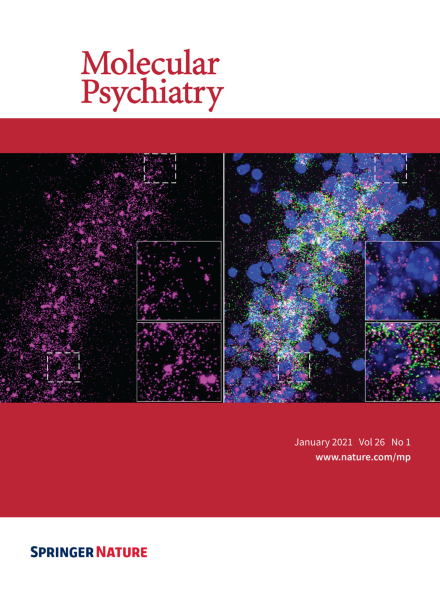
Deep brain stimulation for refractory obsessive-compulsive disorder (OCD): emerging or established therapy?

Read the article Ten years after a clinical report of DBS for refractory OCD (The Lancet 1999, 354:1526), the U.S. Food and Drug Administration (FDA) approved deep brain stimulation (DBS) for treatment-refractory obsessive-compulsive disorder (OCD) as a humanitarian device exemption (HDE H050003, 2009) and a Conformité Européenne (CE mark, 2009) was obtained by Medtronic Inc.. Reimbursement became available in several EU countries. Evidence for safety and efficacy of DBS for treatment refractory OCD is increasing. After 21 years of basic research and clinical trials, H. Wu et al. Molecular Psychiatry published the reasons why electrical stimulation for otherwise treatment refractory OCD using a multipolar electrode implanted in the ventral anterior capsule region (including bed nucleus of stria terminalis and nucleus accumbens) represents an emerging, but not yet established therapy. The authors are convinced that the medical community and the general public should be informed about the statement made in this manuscript, written under the auspices of the WSSFN and endorsed by, amongst others, a series of psychiatrists – co-authors. H. Wu et al. Deep brain stimulation for refractory obsessive-compulsive disorder (OCD) : emerging or established therapy ?”, Molecular Psychiatry, 2020,  published.
Trigeminal Neuralgia

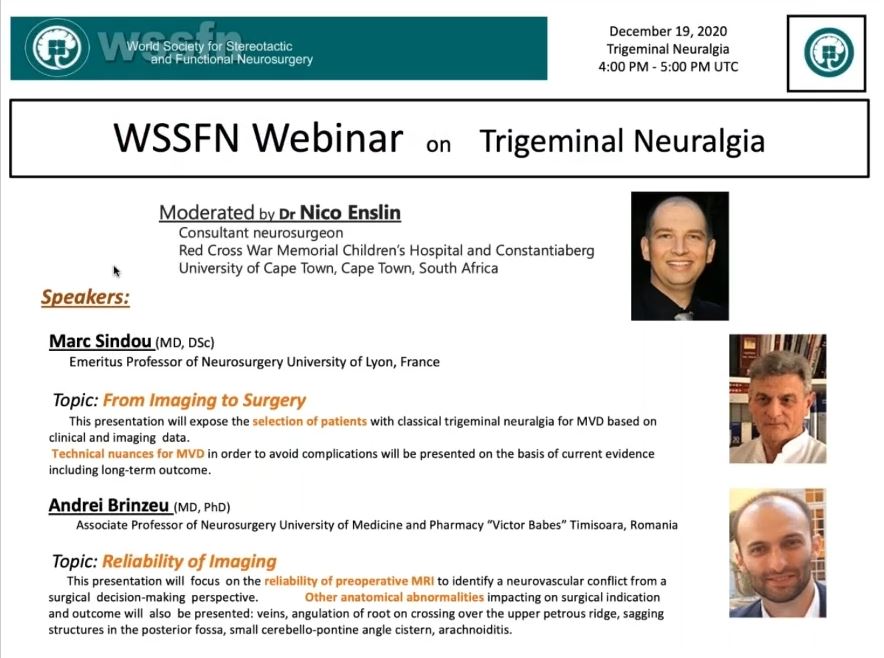
Speakers Marc SindouEmeritus Professor of Neurosurgery University of Lyon, France > From Imaging to SurgeryThis presentation will expose the selection of patients with classical trigeminal neuralgia for MVD based on clinical and imaging data. Technical nuances in order to avoid complications will be presented on the basis of current evidence including long term outcome. Alternatives to MVD and decision-making algorithms will be addressed for a comprehensive discussion on the surgical treatment of trigeminal neuralgia. Andrei BrinzeuAssociate Professor of Neurosurgery University of Medicine and Pharmacy “Victor Babes” Timisoara, Romania > Reliability of ImagingThis presentation will focus on the reliability of preoperative MRI to identify a neurovascular conflict from a surgical decision-making perspective. Other anatomical abnormalities impacting on surgical indication and outcome will also be presented: angulation of root on crossing over the upper petrous ridge, sagging structures in the posterior fossa, small cerebello-pontine angle cistern, arachnoiditis. /wp-content/uploads/videos/wssfn19122020.mp4 Moderated by Dr Nico EnslinConsultant neurosurgeonRed Cross War Memorial Children’s Hospital and ConstantiabergUniversity of Cape Town, Cape Town, South Africa

Lesioning procedures for management of cancer and non-cancer related pain

Speaker Konstantin Slavin, MD, FAANSProfessor & Head of Section of Stereotactic and Functional Neurosurgery, University of Illinois at Chicago, College of Medicine, IL, USA. Chronic and cancer-related pain management strategies continue to be a complex and controversial topic. Advances in technology and an improved understanding of pain have added sophisticated options and have guided attention to more effective procedures. An awareness of these capabilities has expanded the surgical indications for pain relief. During this webinar, the various lesioning procedures available for management of cancer and non-cancer related pain, their indications, technical nuances and complications will be discussed. /wp-content/uploads/videos/wssfn12092020.mp4 Moderated by Dr. A. RUSHNAClinical Instructor, Michigan State UniversityDirector of Restorative and Functional NeurosurgerySpectrum Health Medical GroupGrand Rapids, MI, USA

Psychiatric Neurosurgery – Past & Present

This is an overview of psychiatric neurosurgery from its beginning until the present day, and where we try to analyse modern psychosurgery in a historical context. Speaker Prof Patric BlomstedtNeurosurgeon and professor at University of Umea, Sweden /wp-content/uploads/videos/wssfn04052020.mp4 Moderated by Dr Nico EnslinConsultant neurosurgeonRed Cross War Memorial Children’s Hospital and ConstantiabergUniversity of Cape Town, Cape Town, South Africa

Advances in Neuromodulation for Functional Recovery after Spinal Cord Injury

Speakers Prof Enrico RejcAssistant Professor, Department of Neurological Surgery, University of Louisville, USA.> Spinal Cord Epidural Stimulation for Lower Limb Motor Function Recovery in Individuals with Motor Complete Spinal Cord Injury Severe spinal cord injury (SCI) dramatically impairs sensorimotor function, resulting in paralysis and a drastic decrease in quality of life. However, the scientific evidence presently available challenges the belief that individuals with chronic and severe SCI have essentially no expectation for neurological and functional recovery. This talk will summarize a decade of findings related to the application of spinal cord epidural stimulation below the level of injury in individuals with complete SCI, which have led to unprecedented proof of principle that recovery of motor function, even at a chronic stage, is potentially available. Prof Parag GadAssistant Project Scientist, Department of Neurobiology, University of California, Los Angeles.> Transcutaneous Electrical Spinal Cord Neuromodulator (TESCoN) for Recovery of Neurogenic Bladder Dysfunction after Severe Paralysis It is commonly assumed that restoration of locomotion is the ultimate goal after spinal cord injury (SCI). However, lower urinary tract (LUT) dysfunction is universal among SCI patients and significantly impacts their health and quality of life. TESCoN leads to improvement and normalization of the LUT function after SCI. TESCoN offers several advantages over current therapies for LUT dysfunction due to SCI. It is non-invasive. If the intervention is not tolerated by the subject, it can be immediately discontinued. Further, we demonstrate that TESCoN can modulate the activity of the spinal cord to elicit a specific response in the LUT. Finally, TESCoN can be easily integrated with other rehab programs that a patient may be undergoing. /wp-content/uploads/videos/wssfn25022020.mp4 Moderated by Dr. A. RUSHNAClinical Instructor, Michigan State UniversityDirector of Restorative and Functional NeurosurgerySpectrum Health Medical GroupGrand Rapids, MI, USA Click here to download the presentation

Philip L. Gildenberg, MD, PhD [1935-2020]

Phil Gildenberg was born in March 1935 in Hazelton, PA. He attended Valley Forge Military Academy and was awarded a scholarship to the University of Pennsylvania, where he graduated with honors having majored in zoology. Dr. Gildenberg then received his MD from the Temple University School of Medicine in 1959. During medical school he came to know Ernest Spiegel and Henry Wycis, who in essence invented human stereotactic neurosurgery, and were on the faculty at Temple. He worked with them throughout his neurosurgical residency at Temple, and began working on his PhD there. After Dr. Spiegel retired, Dr. Gildenberg completed his PhD thesis as an NIH Post-Doctor Fellow with Prof. Rolf Hassler at the Max Planck Institute for Brain Research in Frankfurt. He then joined the Cleveland Clinic as a junior faculty member, and in 1972, at the age of 37, was recruited to be the founding Chief of Neurosurgery at the University of Arizona College of Medicine. In 1975, Dr. Gildenberg became the founding Chair of Neurosurgery at the University of Texas, Houston. In 1982 he created the Houston Stereotactic Center, and continued to practice until 2001. Many of us knew Phil Gildenberg from his tireless work for the field of stereotactic and functional neurosurgery. He kept the candle burning through decades when the few practitioners were derided as being “needle docs”, and he played a key role in the development and dissemination of computer-aided technology that has made stereotaxis ubiquitous. Dr. Gildenberg edited our journal, Stereotactic and Functional Neurosurgery, from 1975 (when it was known as Applied Neurophysiology) through 2001. At first with Dr. Ronald Tasker, and in the second edition with Dr. Andres Lozano, he edited the Textbook of Stereotactic and Functional Neurosurgery. Dr. Gildenberg served as the President of the American and World Societies for Stereotactic and Functional Neurosurgery in the 1990s, when not many people were pursuing those titles. He was the record keeper, the wise counsel, and the cheerleader for organized stereotactic and functional neurosurgery for decades. There is a lectureship in his name at the Baylor College of Medicine, where he was Adjunct Professor of Neurosurgery for many years, and the Philip Gildenberg award given by the Congress of Neurological Surgeons each year for the best resident or fellow paper in functional neurosurgery. If you were fortunate to know Phil Gildenberg personally, you saw what a wonderful mentor he was to young neurosurgeons from whom he had nothing to gain except his desire to support others who shared his interests, and the palpable pleasure he took in seeing others grow their careers. In this, and in all of his manifold activities, he partnered with his wife, Patricia Franklin, who also took an interest in the community of stereotactic neurosurgeons and shared Phil’s delight in promoting young colleagues. Dr. Gildenberg developed Parkinson’s disease in 2011, but did not care to talk about it and certainly did not complain. He died on January 15, 2020, and Pat died of lung cancer four days later, a month after that diagnosis of which her husband was not aware. Many of us Phil Gildenberg him a debt that we can’t repay except by keeping his memory alive and inspiring others, as he did many times over, to succeed and excel as stereotactic and functional neurosurgeons. Michael Schulder, MD
Neuromodulation for tremor and related conditions

The webinar is presented by two exceptional neurosurgeons with a long history of neuromodulation for various movement disorders. Prof Patric Blomstedt from Umea, Sweden, will be presenting on aspects of targeting the Zona Incerta for movement disorders and he will be joined by Prof Ludvic Zrinzo form London with a talk on targeting the motor thalamus with DBS and ablation for tremor.  Speakers Prof Patric BlomstedtNeurosurgeon and professor at University of Umea, Sweden> Targeting the caudal Zona Incerta for movement disorders Prof Ludvic ZrinzoNeurosurgeon and professor at University College of London, National Hospital for Neurology and Neurosurgery at Queen’s Square> Targeting the motor thalamus for ablation and DBS /wp-content/uploads/videos/wssfn25112019.mp4 Moderated by Dr Nico EnslinConsultant neurosurgeonRed Cross War Memorial Children’s Hospital and ConstantiabergUniversity of Cape Town, Cape Town, South Africa

Surgical management of drug-resistant epilepsy: Resection versus Neuromodulation

The topic for this webinar will be “Surgical Management of Drug-Resistant Epilepsy: Resection versus Neuromodulation” where our speakers will discuss the various surgical treatment option for management of drug resistant epilepsy (DRE) and compare data on resective versus neuromodulatory approaches. Challenges associated with management of DRE will be talked about and recent published data, as well as their center’s experience will be discussed. This will be a moderated session with time for questions at the end of each talk. Speakers Dr. Dario Englot MD., PhDAssistant Professor of Neurological Surgery and Electrical Engineering, Radiology and Radiological Sciencesand Biomedical Engineering and Surgical Director of Epilepsy at Vanderbilt University Medical Center, Nashville, TN, USA> Title: Resection for Focal Epilepsy: Indications, Outcomes, and Brain Networks Dr. Dileep Nair MD.Section head of adult epilepsy and director of intraoperative neurophysiologic monitoring at Cleveland Clinic, Cleveland, OH, USA> Title: Neuro-Modulation in Epilepsy /wp-content/uploads/videos/wssfn13082019.mp4 Moderated by Dr. A. RUSHNAClinical Instructor, Michigan State UniversityDirector of Restorative and Functional NeurosurgerySpectrum Health Medical GroupGrand Rapids, MI, USA Dr Englot’s presentation Dr Nair’s presentation

Proudly powered by WordPress | Theme : News Elementor by BlazeThemes