
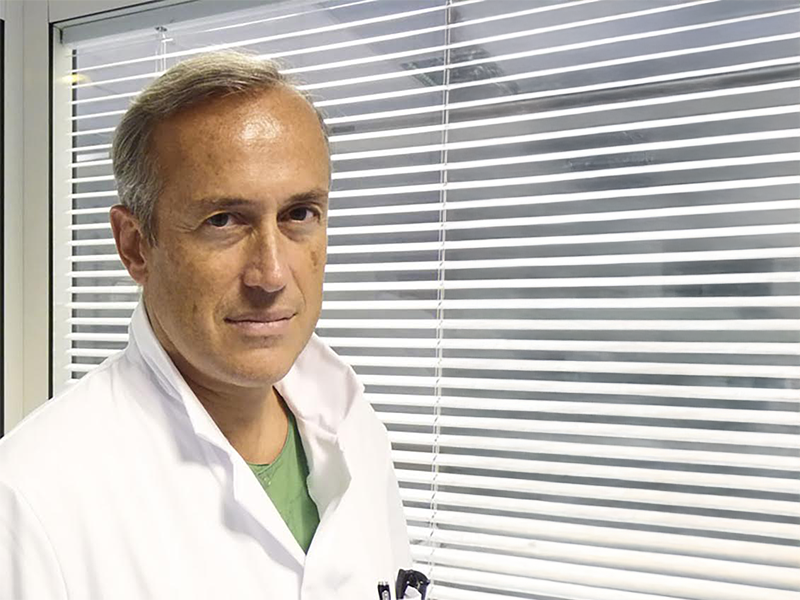
Jean Régis WSSFN President Marseille, France Dear Members and Colleagues, It is both an honor and a privilege to introduce myself as the new President of the World Society for Stereotactic and Functional Neurosurgery (WSSFN). I am deeply grateful for the trust and confidence you have placed in me, and I look forward to working closely with all of you to continue advancing our shared mission. One of my primary objectives during my tenure is to continue fostering a vibrant, inclusive, and globally connected community within WSSFN. Our field encompasses many important sub- disciplines, including movement disorder surgery, psychiatric surgery, epilepsy surgery, pain surgery, spasticity surgery, and restorative neurosurgery. Each of these areas is vital to the progress of our profession and the well-being of our patients. As your president, I am committed to ensuring that all these components of our field are well represented and continue to advance through research, clinical practice, and education. Additionally, I want to emphasize the crucial role that young neurosurgeons play in shaping the future of our specialty. It is vital that we provide them with the support and opportunities to grow, learn, and innovate. As part of this commitment, we must also focus on improving access to training and education, especially in countries where these opportunities may be limited or difficult to access. WSSFN has always been a strong advocate for missions of training and education, and I will work to strengthen our efforts in supporting young neurosurgeons through fellowships, mentorship programs, and educational initiatives, particularly in underserved regions. By supporting the next generation of leaders in our field, we ensure that the progress we’ve made continues for years to come. I am also pleased to announce that our next WSSFN Congress will be held in Marseille, France, in September 2026. This congress will provide an invaluable opportunity for all of us to meet, exchange ideas, and collaborate on the future of stereotactic and functional neurosurgery. It will also serve as a platform to showcase the diversity of our field and the exciting developments in each subspecialty. I encourage you to participate and engage fully in what will be a dynamic and enriching event for all. Thank you once again for the privilege of serving as your President. I look forward to the challenges and opportunities ahead, and I am confident that together, we can continue to make significant contributions to the field of neurosurgery. Let us work together to ensure that our discipline remains inclusive, innovative, and supportive of all members, particularly the next generation. I look forward to seeing you in Marseille in 2026 and to the exciting future that lies ahead for WSSFN. Warmest regards,
Category: Society news
WSSFN Newsletter – Summer 2025
Letter from the President Letter from the Editor Letter from XX World Congress of Stereotactic and Functional NeurosurgeryWSSFN 2024 New chair of the Psychiatric Surgery Task Force Stereotactic Academy Digest Hot Topics in Stereotactic and Functional Neurosurgery SAVE THE DATE: WSSFN 2025 Interim Meeting in Buenos Aires WSSFN Webinars – Thalamic responsive neurostimulation and evolution in SEEG: 07 July 2025 Congress announcements Obituaries †: Tipu Zahed Aziz (1956-2024) Download the latest newsletter

New chair of the Psychiatric Surgery Task Force
Dear Friends, In 2011, the question of the future of Neurosurgery for Psychiatric Disorders was raised by the WSSFN. A task force was created as a platform for key individuals in Psychiatric Surgery from different continents worldwide, with the aim of exchanging ideas and initiating actions. Bart Nuttin was selected to lead this task force, and he ensured that the correct direction for Neurosurgery in psychiatric disorders was maintained, always keeping the interests of the patient and society in mind. Over the past 14 years, he and the group have achieved a colossal amount of high-quality work, overcoming the numerous obstacles associated with this very special field of Functional Neurosurgery. We are all deeply grateful to Bart for this remarkable accomplishment. It is now time for Bart to hand over the leadership to a new team. After democratic discussions, the WSSFN board has elected Volker Coenen and Matilda Naesström as the new chairs of the Psychiatric Neurosurgery Task Force. Both have been deeply involved in the work of the task force and are recognized worldwide as experts in this domain. One of our major challenges is to increase the global interest of the psychiatric community in surgery, and we love the idea of having a psychiatrist as co-chair alongside Volker. I am confident that they are the right people at the right time. Congratulations to both of you! There is still much work to be done! Jean RegisWSSFN President On 10 February 2025, the Board of Officers of the WSSFN appointed a new chair for the Psychiatric Surgery Task Force of the WSSFN. Volker Coenen from Freiburg (Germany) was chosen to succeed Bart Nuttin from Leuven (Belgium) in this position. After concluding his professional career, Dr. Nuttin had requested to step down from his role as chair. As a new development, a psychiatric co-chair has been appointed to foster closer collaboration between specialties and to promote the acceptance of neurosurgical treatment options within the psychiatric community. This newly created co-chair position was unanimously assigned to Matilda Naesström, a psychiatrist from Umeå (Sweden). The task force was originally founded under the name WSSFN Committee for Neurosurgery for Psychiatric Disorders following the WSSFN Shanghai Interim Meeting in 2011 and was officially announced during the Lisbon Meeting in 2012 under the leadership of Dr. Nuttin. The group had previously convened under Osvaldo Vilela Filho (Goiás, Brazil) since 2009. It was later renamed the Task Force for Neurosurgery for Psychiatric Disorders (now more succinctly referred to as the Psychiatric Surgery Task Force). Dr. Nuttin was appointed as its first chair, and from the outset, consistent psychiatric input has been a key feature. The task force has been actively engaged in advancing neurosurgical treatments for psychiatric conditions such as obsessive-compulsive disorder (OCD), major depression, and others. Under Dr. Nuttin’s leadership, the task force has played a crucial role in the publication of influential guidelines and scientific papers 2-4. The Psychiatric Surgery Task Force is committed to the development of neurosurgical techniques—including Deep Brain Stimulation (DBS) and lesion-based methods such as Focused Ultrasound and stereotactic radiosurgery—for psychiatric disorders that are resistant to conservative and best-practice medical treatments. Operating within a rigorous scientific and ethical framework, the task force meets quarterly (via web meetings or in person during ESSFN and WSSFN events). All WSSFN members interested in contributing to the development of neurosurgical approaches for psychiatric indications are encouraged to join. Dr. Nuttin’s landmark paper 1 on DBS of the anterior limb of the internal capsule for the treatment of OCD marked the beginning of the modern era of psychiatric surgery. His clinical focus has consistently remained on the advancement of Deep Brain Stimulation for OCD. The WSSFN extends its sincere gratitude to Dr. Nuttin for his long-standing, thoughtful, and dedicated service as chair of the task force. Volker A. Coenen, MD (Freiburg, Germany) Incoming chair Matilda Naesström, MD, PhD (Umea, Sweden) Incoming Psychiatric co-chair Bart Nuttin, MD (Leuven, Belgium) Outgoing chair of the task force 2011-2025 References Nuttin, B., Cosyns, P., Demeulemeester, H., Gybels, J. & Meyerson, B. Electrical stimulation in anterior limbs of internal capsules in patients with obsessive-compulsive disorder. The Lancet 354, 1526–1 (1999). Nuttin, B. et al. Consensus on guidelines for stereotactic neurosurgery for psychiatric disorders. J. Neurol., Neurosurg. Psychiatry 85, 1003 (2014). Wu, H. et al. Deep brain stimulation for refractory obsessive-compulsive disorder (OCD): emerging or established therapy? Mol Psychiatr 26, 60–65 (2021). Visser-Vandewalle, V. et al. Deep brain stimulation for obsessive–compulsive disorder: a crisis of access. Nat Med 28, 1529–1532 (2022).

Hot Topics in Stereotactic and Functional Neurosurgery
by Prof. Marwan Hariz [2025 Newsletter]
Letter from XXth World Congress of Stereotactic and Functional Neurosurgery 2024
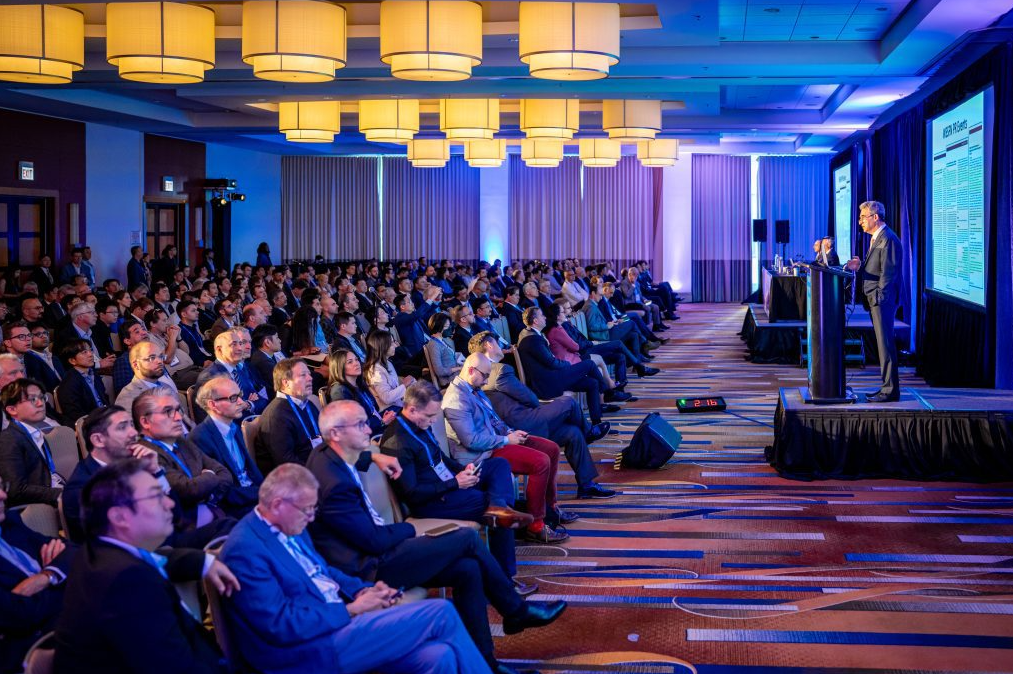
Vanessa Milanese, MD, PhD Brazilian Society of Neurosurgery Communication Director Secretary Director of the Brazilian Society of Stereotactic and Functional Neurosurgery Functional Neurosurgeon at Beneficência Portugues of São Paulo Hospital, Brazil Adjunct Assistant Professor of Neurosurgery at Mayo Clinic Florida, USA From September 3rd to 6th, 2024, the XX World Congress of Stereotactic and Functional Neurosurgery unfolded in the vibrant city of Chicago, USA, marking the 75th anniversary of modern stereotaxis. This landmark event brought together over 744 distinguished experts, including world-renowned neurosurgeons, aspiring professionals, leading researchers, healthcare specialists, and peers from 52 countries, all united by their commitment to advancing the field of Functional Neurosurgery. Over the course of four days, participants explored the latest scientific breakthroughs, addressed pressing challenges, and examined transformative trends reshaping the discipline. Since its inception in 1963, the WSSFN Congress has been held regularly and remains a cornerstone event in the neurosurgery community. The 2024 Congress featured a meticulously curated program that promoted interdisciplinary collaboration and offered a comprehensive overview of current developments in stereotactic and functional neurosurgery. Attendees engaged in state-of-the-art symposia, interactive breakfast sessions, and hands-on workshops led by internationally recognized authorities—enhancing both skills and knowledge. For early-career professionals, pre-conference workshops provided invaluable practical training in cutting-edge techniques, guided by some of the world’s most respected experts. Participants were invited to present their research, gain international recognition, and foster collaborations that extended beyond the congress (Figure 1). This platform highlighted groundbreaking contributions to the field, sparking insightful discussions and innovative ideas to further the advancement of functional neurosurgical care. Figure 1. The global WSSFN community came together to exchange experiences across cultures, share diverse perspectives, collaborate, and expand professional networks—while forming meaningful, lasting relationships (Figure 2). Together, we celebrated a milestone in the history of stereotaxis and helped shape a shared vision for the future of Functional Neurosurgery. Figure 2. The Congress also celebrated the importance of community and connection. Through vibrant social events, participants engaged with colleagues from diverse cultural backgrounds and enjoyed a memorable time of learning, all while building meaningful connections and strengthening the global WSSFN network. One of the key outcomes of the XX World Congress of Stereotactic and Functional Neurosurgery was the establishment of a Globalization Task Force, dedicated to advancing functional neurosurgery in regions of the world where such treatments are currently underdeveloped or unavailable. After all, WSSFN 2024 was not only about science. With its unique blend of iconic architecture, rich history, and dynamic culture, Chicago offered the perfect backdrop for both professional and personal growth. Whether exploring the city’s modern innovations or enjoying its traditional charm, attendees experienced an unforgettable combination of professional enrichment and leisure. One of the event’s highlights was the reception at Navy Pier (Figure 3), which provided a picturesque and festive setting for networking and celebration. Figure 3. As we celebrate this milestone in the history of stereotaxis, WSSFN 2024 stands as a testament to the relentless pursuit of progress and the fostering of a shared vision for the future of Functional Neurosurgery. A highlight of the event was the unforgettable award ceremony, where named awards were presented to some of the society’s most deserving members. The Spiegel-Wycis Awards were awarded to Bart Nuttin from the Netherlands and Joachim Krauss from Germany; the Tasker Award was presented to Jin Woo Chang from South Korea; and the Gildenberg and Kandel Awards were given to U.S. neurosurgeons Michael Schulder and Kim Burchiel, respectively. At the closing ceremony, Dr. Mojgan Hodaie presented the awards and introduced the newly elected 2024–2028 board members (Figure 4). Dr. Konstantin Slavin gave his closing remarks and introduced Dr. Jean Régis, the incoming WSSFN President for 2025–2026 (Figure 5). Figure 4. Figure 5. Letter prepared by Dr Vanessa Milanese Join us as we continue to shape the future of Functional Neurosurgery alongside this inspiring leadership team. The Scientific Program Committee, under the leadership of Professor Sameer Sheth, deserves commendation for curating an outstanding and thoughtfully designed program.
Deep brain stimulation for refractory obsessive-compulsive disorder (OCD): emerging or established therapy?
Read the article Ten years after a clinical report of DBS for refractory OCD (The Lancet 1999, 354:1526), the U.S. Food and Drug Administration (FDA) approved deep brain stimulation (DBS) for treatment-refractory obsessive-compulsive disorder (OCD) as a humanitarian device exemption (HDE H050003, 2009) and a Conformité Européenne (CE mark, 2009) was obtained by Medtronic Inc.. Reimbursement became available in several EU countries. Evidence for safety and efficacy of DBS for treatment refractory OCD is increasing. After 21 years of basic research and clinical trials, H. Wu et al. Molecular Psychiatry published the reasons why electrical stimulation for otherwise treatment refractory OCD using a multipolar electrode implanted in the ventral anterior capsule region (including bed nucleus of stria terminalis and nucleus accumbens) represents an emerging, but not yet established therapy. The authors are convinced that the medical community and the general public should be informed about the statement made in this manuscript, written under the auspices of the WSSFN and endorsed by, amongst others, a series of psychiatrists – co-authors. H. Wu et al. Deep brain stimulation for refractory obsessive-compulsive disorder (OCD) : emerging or established therapy ?”, Molecular Psychiatry, 2020, published.
![Philip L. Gildenberg, MD, PhD [1935-2020]](https://wssfn.groupe-mco.com/wp-content/uploads/2020/01/3005-22650-PhilipGildenbergphoto.png)
Philip L. Gildenberg, MD, PhD [1935-2020]
Phil Gildenberg was born in March 1935 in Hazelton, PA. He attended Valley Forge Military Academy and was awarded a scholarship to the University of Pennsylvania, where he graduated with honors having majored in zoology. Dr. Gildenberg then received his MD from the Temple University School of Medicine in 1959. During medical school he came to know Ernest Spiegel and Henry Wycis, who in essence invented human stereotactic neurosurgery, and were on the faculty at Temple. He worked with them throughout his neurosurgical residency at Temple, and began working on his PhD there. After Dr. Spiegel retired, Dr. Gildenberg completed his PhD thesis as an NIH Post-Doctor Fellow with Prof. Rolf Hassler at the Max Planck Institute for Brain Research in Frankfurt. He then joined the Cleveland Clinic as a junior faculty member, and in 1972, at the age of 37, was recruited to be the founding Chief of Neurosurgery at the University of Arizona College of Medicine. In 1975, Dr. Gildenberg became the founding Chair of Neurosurgery at the University of Texas, Houston. In 1982 he created the Houston Stereotactic Center, and continued to practice until 2001. Many of us knew Phil Gildenberg from his tireless work for the field of stereotactic and functional neurosurgery. He kept the candle burning through decades when the few practitioners were derided as being “needle docs”, and he played a key role in the development and dissemination of computer-aided technology that has made stereotaxis ubiquitous. Dr. Gildenberg edited our journal, Stereotactic and Functional Neurosurgery, from 1975 (when it was known as Applied Neurophysiology) through 2001. At first with Dr. Ronald Tasker, and in the second edition with Dr. Andres Lozano, he edited the Textbook of Stereotactic and Functional Neurosurgery. Dr. Gildenberg served as the President of the American and World Societies for Stereotactic and Functional Neurosurgery in the 1990s, when not many people were pursuing those titles. He was the record keeper, the wise counsel, and the cheerleader for organized stereotactic and functional neurosurgery for decades. There is a lectureship in his name at the Baylor College of Medicine, where he was Adjunct Professor of Neurosurgery for many years, and the Philip Gildenberg award given by the Congress of Neurological Surgeons each year for the best resident or fellow paper in functional neurosurgery. If you were fortunate to know Phil Gildenberg personally, you saw what a wonderful mentor he was to young neurosurgeons from whom he had nothing to gain except his desire to support others who shared his interests, and the palpable pleasure he took in seeing others grow their careers. In this, and in all of his manifold activities, he partnered with his wife, Patricia Franklin, who also took an interest in the community of stereotactic neurosurgeons and shared Phil’s delight in promoting young colleagues. Dr. Gildenberg developed Parkinson’s disease in 2011, but did not care to talk about it and certainly did not complain. He died on January 15, 2020, and Pat died of lung cancer four days later, a month after that diagnosis of which her husband was not aware. Many of us Phil Gildenberg him a debt that we can’t repay except by keeping his memory alive and inspiring others, as he did many times over, to succeed and excel as stereotactic and functional neurosurgeons. Michael Schulder, MD