
WSSFN – World Society for Stereotactic and Functional Neurosurgery

WSSFN – World Society for Stereotactic and Functional Neurosurgery

Lesioning procedures for management of cancer and non-cancer related pain

Speaker Konstantin Slavin, MD, FAANSProfessor & Head of Section of Stereotactic and Functional Neurosurgery, University of Illinois at Chicago, College of Medicine, IL, USA. Chronic and cancer-related pain management strategies continue to be a complex and controversial topic. Advances in technology and an improved understanding of pain have added sophisticated options and have guided attention to more effective procedures. An awareness of these capabilities has expanded the surgical indications for pain relief. During this webinar, the various lesioning procedures available for management of cancer and non-cancer related pain, their indications, technical nuances and complications will be discussed. /wp-content/uploads/videos/wssfn12092020.mp4 Moderated by Dr. A. RUSHNAClinical Instructor, Michigan State UniversityDirector of Restorative and Functional NeurosurgerySpectrum Health Medical GroupGrand Rapids, MI, USA

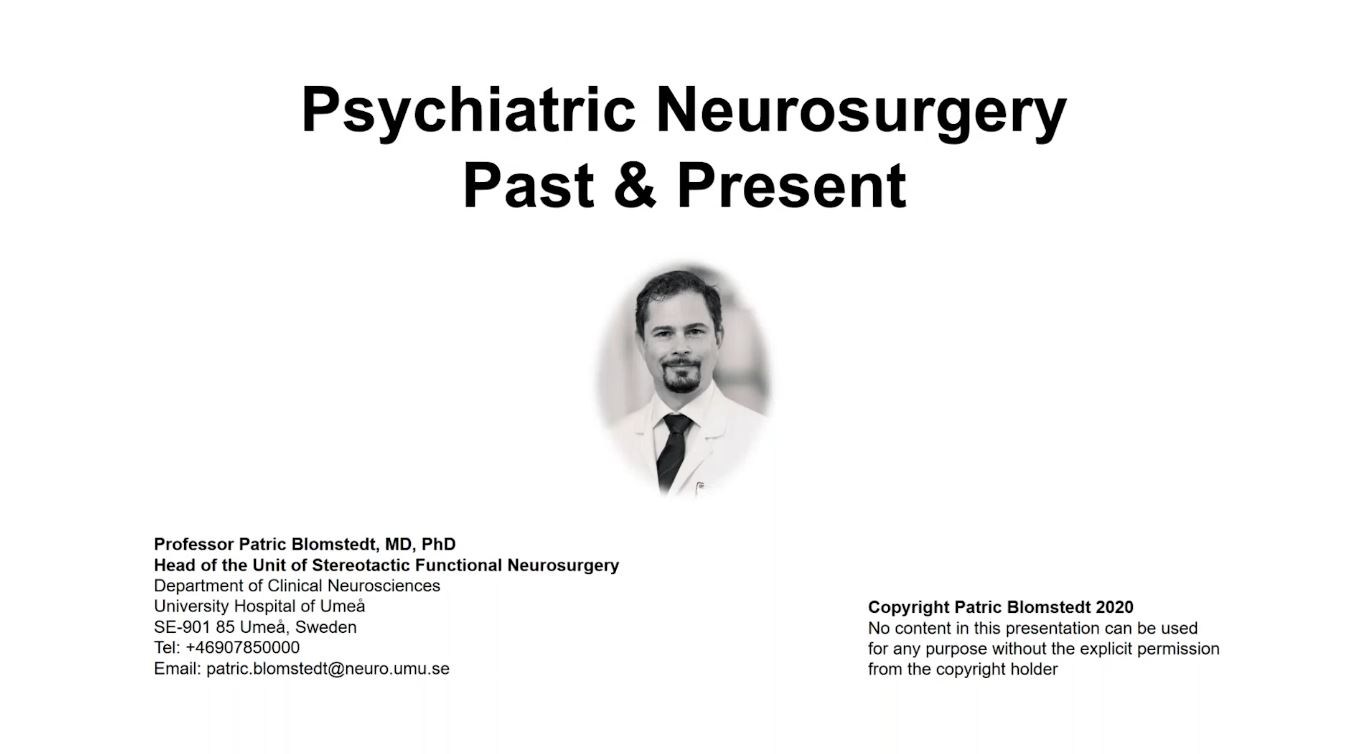
Psychiatric Neurosurgery – Past & Present

This is an overview of psychiatric neurosurgery from its beginning until the present day, and where we try to analyse modern psychosurgery in a historical context. Speaker Prof Patric BlomstedtNeurosurgeon and professor at University of Umea, Sweden /wp-content/uploads/videos/wssfn04052020.mp4 Moderated by Dr Nico EnslinConsultant neurosurgeonRed Cross War Memorial Children’s Hospital and ConstantiabergUniversity of Cape Town, Cape Town, South Africa

Advances in Neuromodulation for Functional Recovery after Spinal Cord Injury

Speakers Prof Enrico RejcAssistant Professor, Department of Neurological Surgery, University of Louisville, USA.> Spinal Cord Epidural Stimulation for Lower Limb Motor Function Recovery in Individuals with Motor Complete Spinal Cord Injury Severe spinal cord injury (SCI) dramatically impairs sensorimotor function, resulting in paralysis and a drastic decrease in quality of life. However, the scientific evidence presently available challenges the belief that individuals with chronic and severe SCI have essentially no expectation for neurological and functional recovery. This talk will summarize a decade of findings related to the application of spinal cord epidural stimulation below the level of injury in individuals with complete SCI, which have led to unprecedented proof of principle that recovery of motor function, even at a chronic stage, is potentially available. Prof Parag GadAssistant Project Scientist, Department of Neurobiology, University of California, Los Angeles.> Transcutaneous Electrical Spinal Cord Neuromodulator (TESCoN) for Recovery of Neurogenic Bladder Dysfunction after Severe Paralysis It is commonly assumed that restoration of locomotion is the ultimate goal after spinal cord injury (SCI). However, lower urinary tract (LUT) dysfunction is universal among SCI patients and significantly impacts their health and quality of life. TESCoN leads to improvement and normalization of the LUT function after SCI. TESCoN offers several advantages over current therapies for LUT dysfunction due to SCI. It is non-invasive. If the intervention is not tolerated by the subject, it can be immediately discontinued. Further, we demonstrate that TESCoN can modulate the activity of the spinal cord to elicit a specific response in the LUT. Finally, TESCoN can be easily integrated with other rehab programs that a patient may be undergoing. /wp-content/uploads/videos/wssfn25022020.mp4 Moderated by Dr. A. RUSHNAClinical Instructor, Michigan State UniversityDirector of Restorative and Functional NeurosurgerySpectrum Health Medical GroupGrand Rapids, MI, USA Click here to download the presentation

Neuromodulation for tremor and related conditions

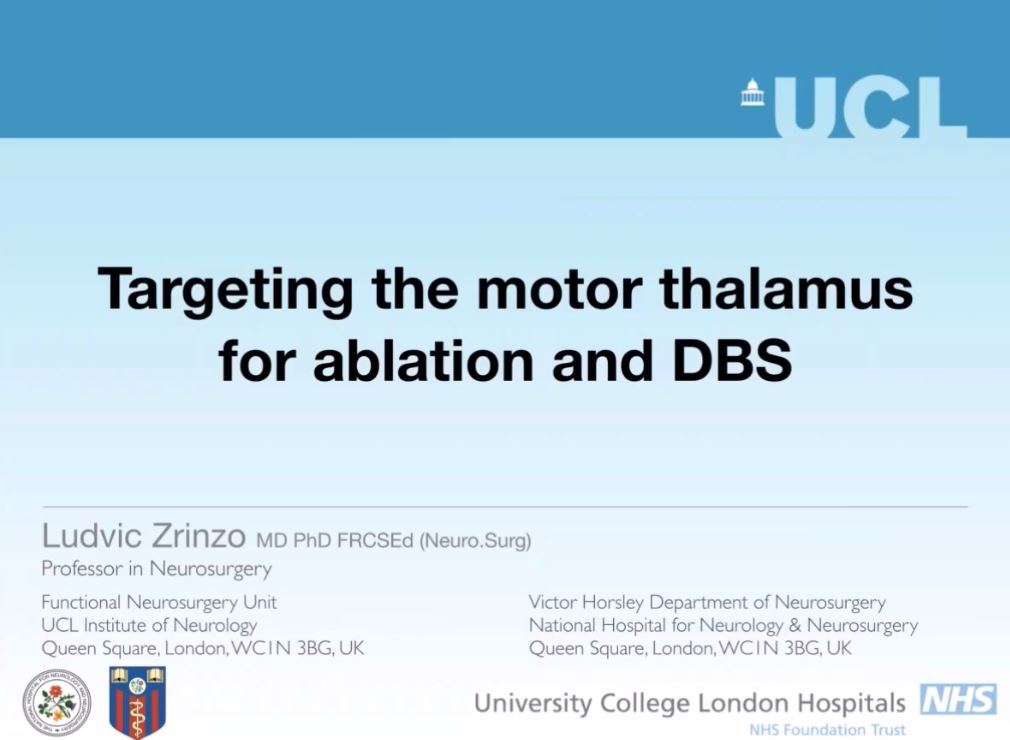
The webinar is presented by two exceptional neurosurgeons with a long history of neuromodulation for various movement disorders. Prof Patric Blomstedt from Umea, Sweden, will be presenting on aspects of targeting the Zona Incerta for movement disorders and he will be joined by Prof Ludvic Zrinzo form London with a talk on targeting the motor thalamus with DBS and ablation for tremor.  Speakers Prof Patric BlomstedtNeurosurgeon and professor at University of Umea, Sweden> Targeting the caudal Zona Incerta for movement disorders Prof Ludvic ZrinzoNeurosurgeon and professor at University College of London, National Hospital for Neurology and Neurosurgery at Queen’s Square> Targeting the motor thalamus for ablation and DBS /wp-content/uploads/videos/wssfn25112019.mp4 Moderated by Dr Nico EnslinConsultant neurosurgeonRed Cross War Memorial Children’s Hospital and ConstantiabergUniversity of Cape Town, Cape Town, South Africa

Surgical management of drug-resistant epilepsy: Resection versus Neuromodulation

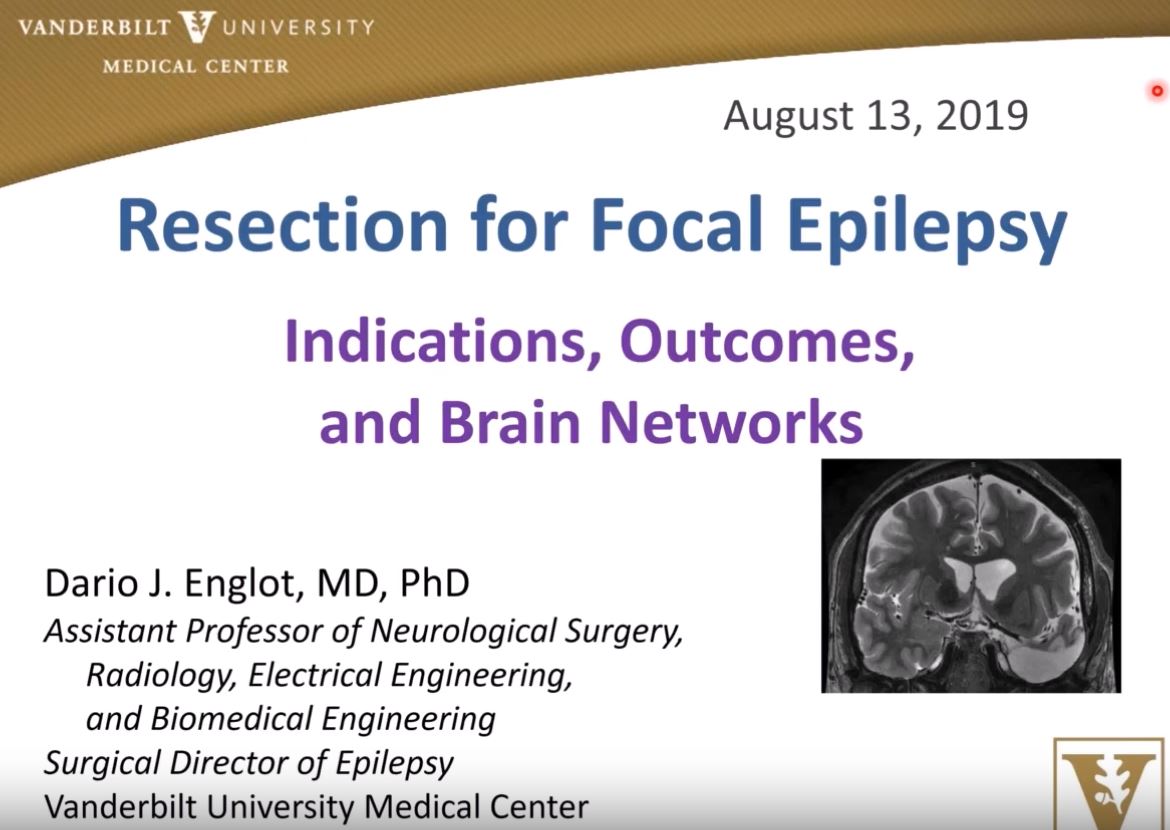
The topic for this webinar will be “Surgical Management of Drug-Resistant Epilepsy: Resection versus Neuromodulation” where our speakers will discuss the various surgical treatment option for management of drug resistant epilepsy (DRE) and compare data on resective versus neuromodulatory approaches. Challenges associated with management of DRE will be talked about and recent published data, as well as their center’s experience will be discussed. This will be a moderated session with time for questions at the end of each talk. Speakers Dr. Dario Englot MD., PhDAssistant Professor of Neurological Surgery and Electrical Engineering, Radiology and Radiological Sciencesand Biomedical Engineering and Surgical Director of Epilepsy at Vanderbilt University Medical Center, Nashville, TN, USA> Title: Resection for Focal Epilepsy: Indications, Outcomes, and Brain Networks Dr. Dileep Nair MD.Section head of adult epilepsy and director of intraoperative neurophysiologic monitoring at Cleveland Clinic, Cleveland, OH, USA> Title: Neuro-Modulation in Epilepsy /wp-content/uploads/videos/wssfn13082019.mp4 Moderated by Dr. A. RUSHNAClinical Instructor, Michigan State UniversityDirector of Restorative and Functional NeurosurgerySpectrum Health Medical GroupGrand Rapids, MI, USA Dr Englot’s presentation Dr Nair’s presentation

Transcranial Magnetic Stimulation: Applications in Neuromodulation, Perioperative monitoring and Neurorestoration

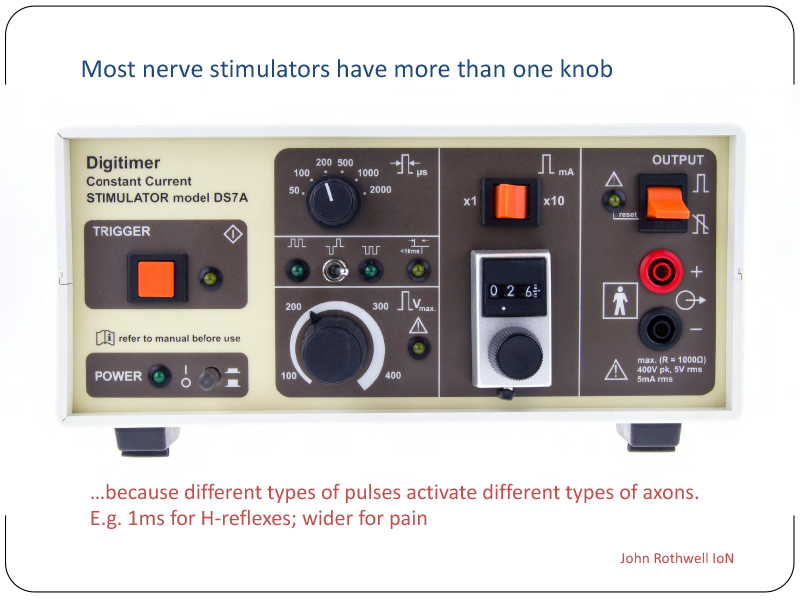
The topic for this webinar will be “Transcranial Magnetic Stimulation (TMS): Applications in Neuromodulation, Perioperative monitoring and Neurorestoration”. Speakers will talk about the concept, physiology and potential advantages of using TMS in evaluation and managing various conditions. Techniques, technology and the physiological basis of it will be discussed. Recent published data, as well as their center’s experience with this emerging technology will also be debated. This session will be moderated with time for questions at the end of each talk. Speakers Prof. J. RothwellUCL Queen Square Institute of NeurologyLondon, UK> TMS: Basics and management of movement disorders Prof. S. F. Taylor, MDProfessor of PsychiatryAssociate Chair for Research and Research Regulatory Affairs University of Michigan Department of Psychiatry Rachel Upjohn BuildingMichigan, USA> Transcranial Magnetic Stimulation: Applications in psychiatry Prof. D. De Ridder, MD, PhDUniversity of Otago · Department of Surgical SciencesDunedin, New Zealand> TMS: Managing tinnitus Prof. L. ObermanHarvard Medical School (HMS)Department of NeurologyWashington DC, USA> Transcranial Magnetic Stimulation: Applications in Autism spectrum disease Prof. F. Vergani MD, PhD, FRCS (SN)Consultant NeurosurgeonKing’s College HospitalLondon, UK> TMS: Experience and use of peri-operative functional mapping in cerebral lesions /wp-content/uploads/videos/wssfn18022019.mp4 Moderated by Dr Nico EnslinConsultant neurosurgeonRed Cross War Memorial Children’s Hospital and ConstantiabergUniversity of Cape Town, Cape Town, South Africa Click here to download the presentation

DBS using directional leads

Our speakers will discuss the concept, physiology and potential advantages of using directional leads. Programming algorithms and associated challenges will be talked about and recent published data, as well as their center’s experience with this emerging technology will be debated. This will be a moderated session with time for questions at the end of each talk. We have two featured speakers: Dr. Jens Volkmann, Director and Chairman of the Department of Neurology at the University Clinic Würzburg, Germany, and Dr. Till Dembek, Clinical Researcher, Department of Neurology and Research Group for Movement Disorders and Deep Brain Stimulation at the University of Cologne, Germany. The registration link for the webinar will be sent out to all members, along with reminders once the members have registered.  Speakers Prof. T. A. DembekDepartment of NeurologyDepartment of Stereotactic and Functional NeurosurgeryUniversity Hospital of Cologne, Germany Prof. Dr. J. VolkmannDepartment of NeurologyUniversity Hospital of WürzburgWürzburg, Germany /wp-content/uploads/videos/wssfn04092018.mp4 Moderated by Dr. A. RUSHNAClinical Instructor, Michigan State UniversityDirector of Restorative and Functional NeurosurgerySpectrum Health Medical GroupGrand Rapids, MI, USA Click here to download the presentation

Proudly powered by WordPress | Theme : News Elementor by BlazeThemes