WSSFN – World Society for Stereotactic and Functional Neurosurgery

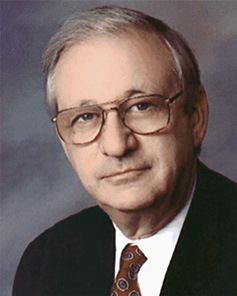
Phil Gildenberg was born in March 1935 in Hazelton, PA. He attended Valley Forge Military Academy and was awarded a scholarship to the University of Pennsylvania, where he graduated with honors having majored in zoology. Dr. Gildenberg then received his MD from the Temple University School of Medicine in 1959. During medical school he came to know Ernest Spiegel and Henry Wycis, who in essence invented human stereotactic neurosurgery, and were on the faculty at Temple. He worked with them throughout his neurosurgical residency at Temple, and began working on his PhD there. After Dr. Spiegel retired, Dr. Gildenberg completed his PhD thesis as an NIH Post-Doctor Fellow with Prof. Rolf Hassler at the Max Planck Institute for Brain Research in Frankfurt. He then joined the Cleveland Clinic as a junior faculty member, and in 1972, at the age of 37, was recruited to be the founding Chief of Neurosurgery at the University of Arizona College of Medicine. In 1975, Dr. Gildenberg became the founding Chair of Neurosurgery at the University of Texas, Houston. In 1982 he created the Houston Stereotactic Center, and continued to practice until 2001.
Many of us knew Phil Gildenberg from his tireless work for the field of stereotactic and functional neurosurgery. He kept the candle burning through decades when the few practitioners were derided as being “needle docs”, and he played a key role in the development and dissemination of computer-aided technology that has made stereotaxis ubiquitous. Dr. Gildenberg edited our journal, Stereotactic and Functional Neurosurgery, from 1975 (when it was known as Applied Neurophysiology) through 2001. At first with Dr. Ronald Tasker, and in the second edition with Dr. Andres Lozano, he edited the Textbook of Stereotactic and Functional Neurosurgery. Dr. Gildenberg served as the President of the American and World Societies for Stereotactic and Functional Neurosurgery in the 1990s, when not many people were pursuing those titles. He was the record keeper, the wise counsel, and the cheerleader for organized stereotactic and functional neurosurgery for decades. There is a lectureship in his name at the Baylor College of Medicine, where he was Adjunct Professor of Neurosurgery for many years, and the Philip Gildenberg award given by the Congress of Neurological Surgeons each year for the best resident or fellow paper in functional neurosurgery.
If you were fortunate to know Phil Gildenberg personally, you saw what a wonderful mentor he was to young neurosurgeons from whom he had nothing to gain except his desire to support others who shared his interests, and the palpable pleasure he took in seeing others grow their careers. In this, and in all of his manifold activities, he partnered with his wife, Patricia Franklin, who also took an interest in the community of stereotactic neurosurgeons and shared Phil’s delight in promoting young colleagues.
Dr. Gildenberg developed Parkinson’s disease in 2011, but did not care to talk about it and certainly did not complain. He died on January 15, 2020, and Pat died of lung cancer four days later, a month after that diagnosis of which her husband was not aware. Many of us Phil Gildenberg him a debt that we can’t repay except by keeping his memory alive and inspiring others, as he did many times over, to succeed and excel as stereotactic and functional neurosurgeons.
Michael Schulder, MD